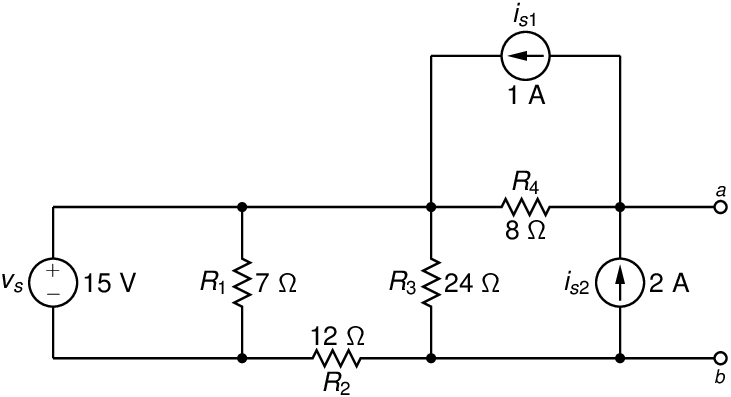
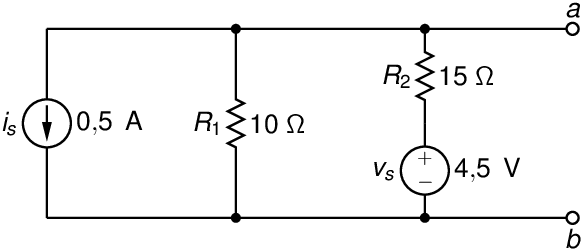
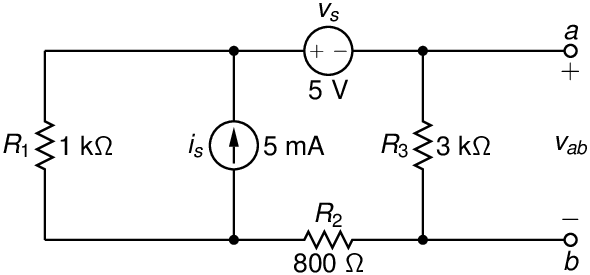
Click on each circuit below to views its .m4cm source code
Circuit macros was specifically developed to “draw” circuit diagrams. Using it to do just that is an absolute plessure. See the below sections for examples on:
- Simple series and parallel resistive circuits
- Nodal analysis circuits
- Mesh analysis circuits
- A combination of nodal and mesh analysis circuits
- Source transformations
- Superposition
- Thévenin and Norton equivalents
Simple series and parallel resistive circuits
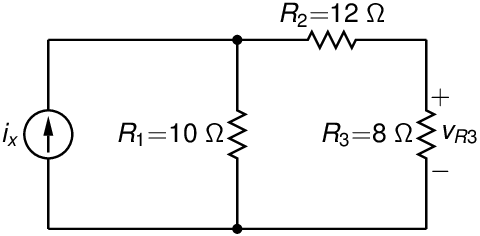
If the source current of is know, solve for
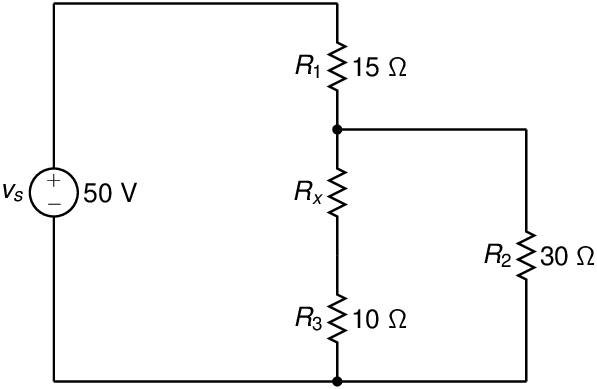
With known, use current division to determine
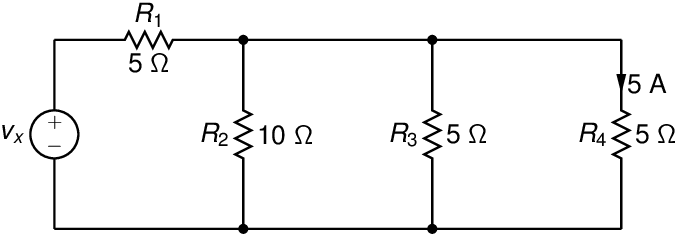
With 5 A flowing through , solve for
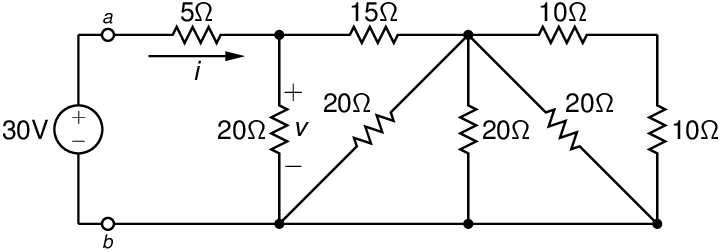
Find the current value and voltage value .
Find the current values for and
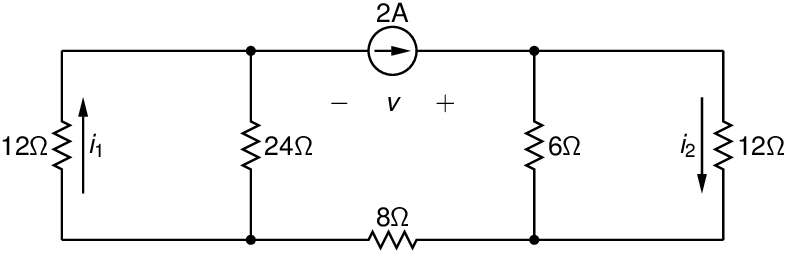
Nodal analysis
Use nodal analysis to find the voltage values and , and then use this to find the current value,.
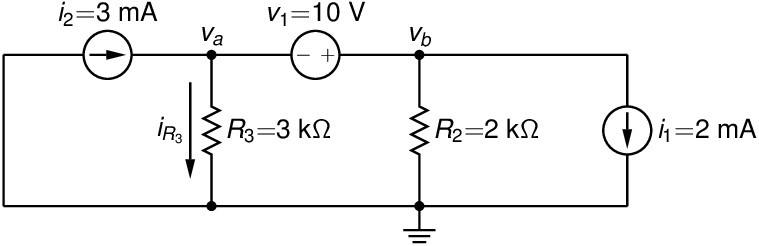
Use nodal analysis to solve for and
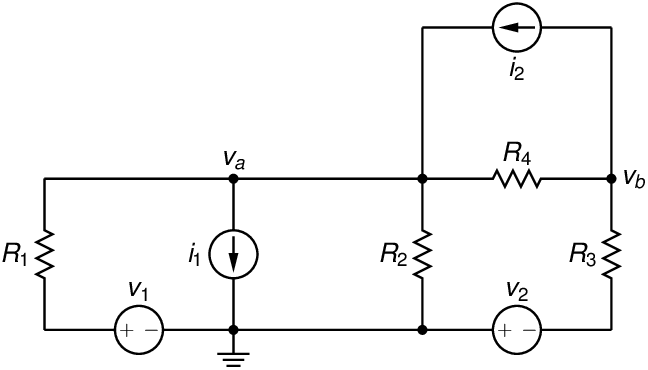
Use nodal analysis to solve for and
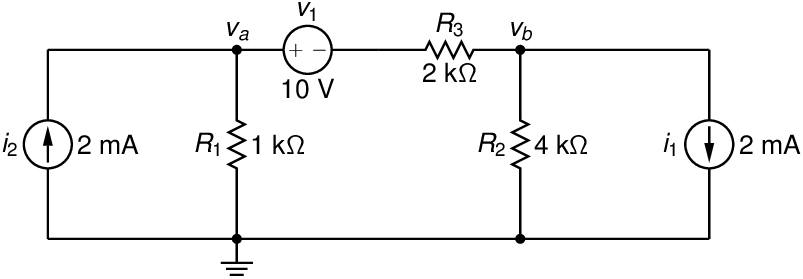
Use nodal analysis to solve for , and , and use these values to solve for
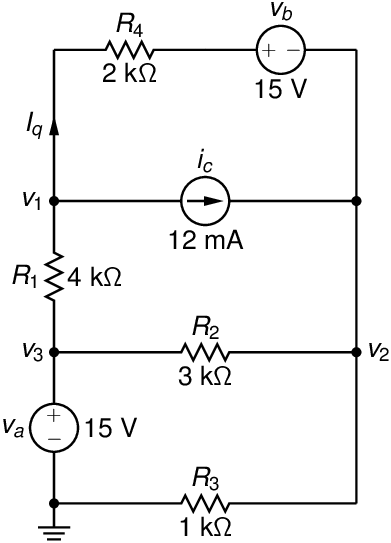
Mesh analysis
Use mesh analysis to solve the mesh currents,, and .
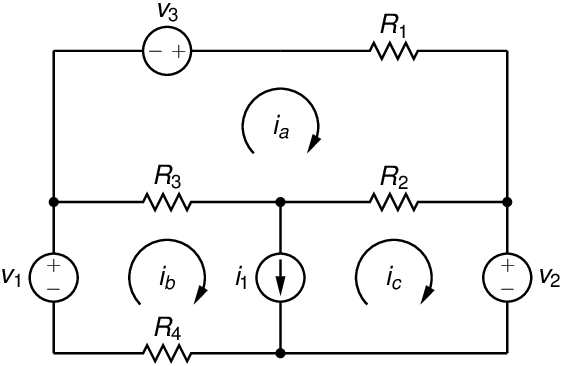
Use mesh analysis to solve the mesh currents, , and
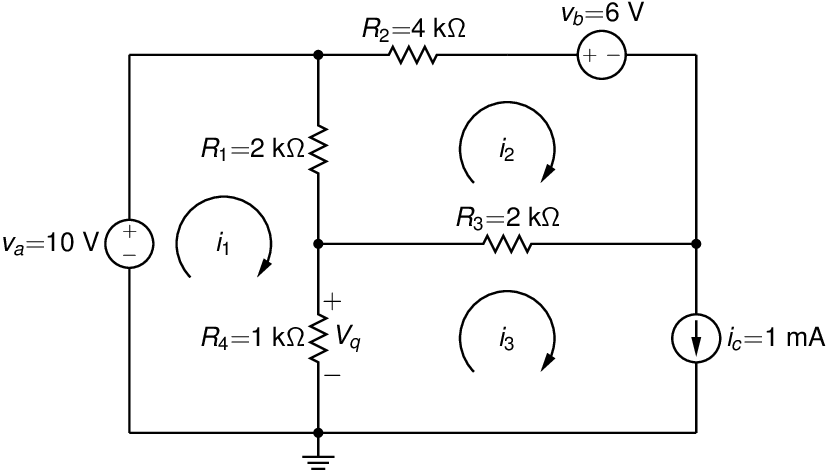
Use mesh analysis to solve the mesh currents, , and the super mesh current
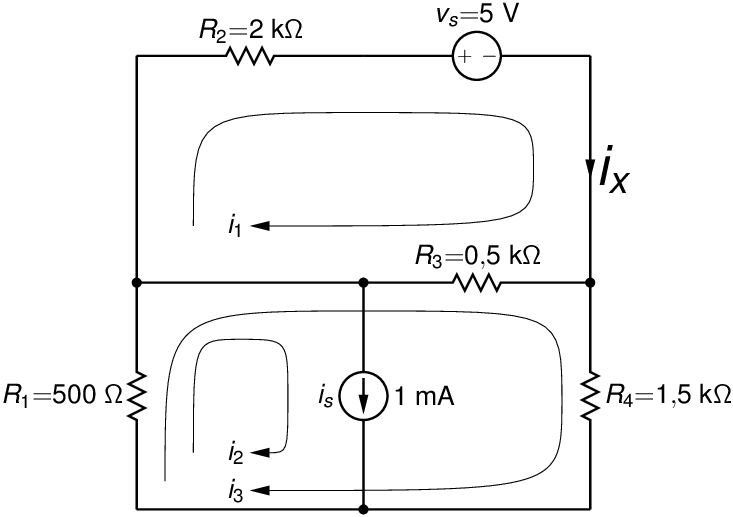
Nodal and mesh analysis
Use nodal analysis to solve node voltages , and and mesh analysis to solve the mesh currents, , and , and check your answers.
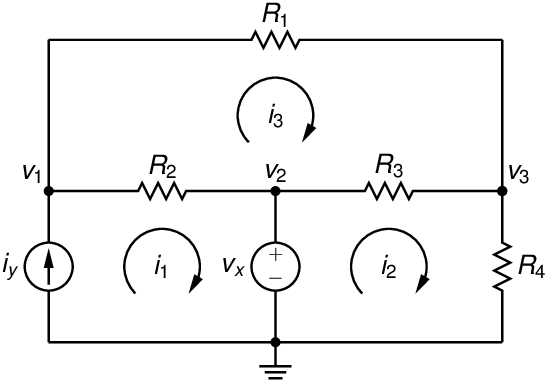
Use nodal analysis to solve node voltages , and and mesh analysis to solve the mesh currents, , and , and check your answers.
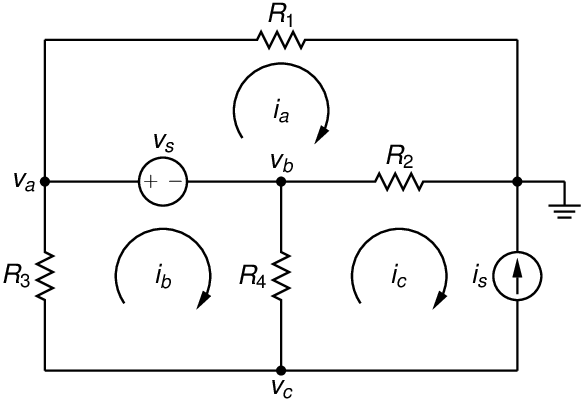
Use nodal analysis to solve node voltages , and and mesh analysis to solve the mesh currents, , and , and check your answers.
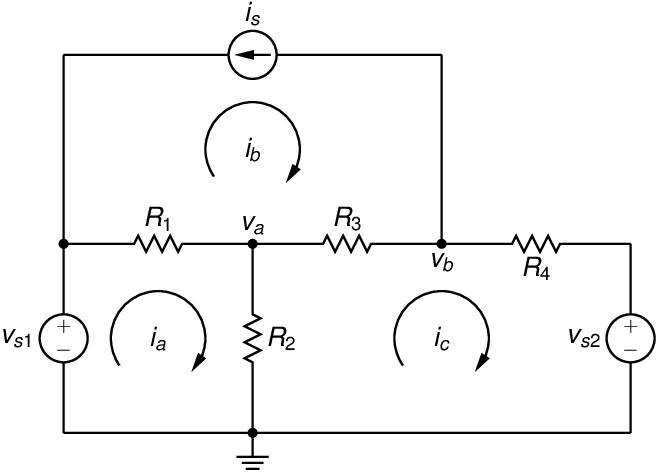
Use nodal analysis to solve node voltages , and and mesh analysis to solve the mesh currents, , , and , and check your answers.
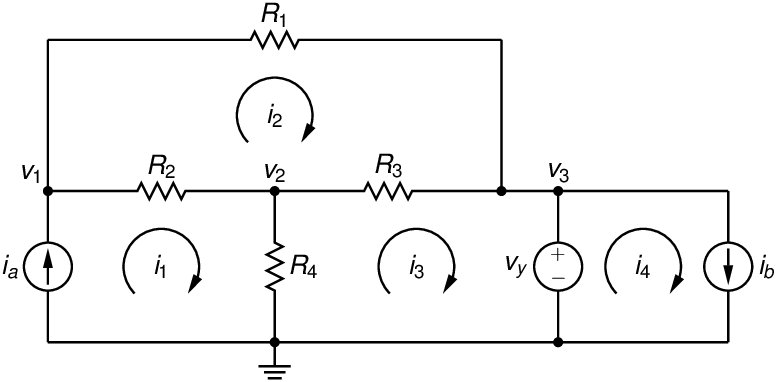
Source transformations
Use source transformations and current division to determine .
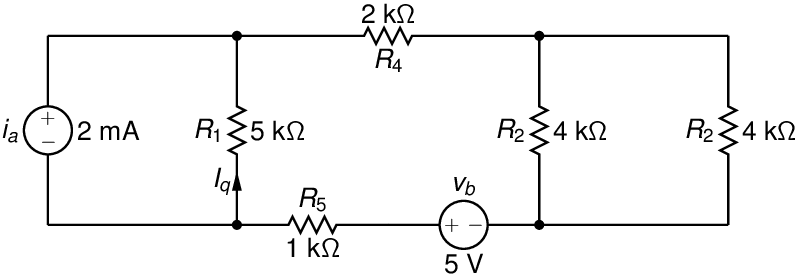
Use source transformations to determine the Thévening equivalent circuit between terminals a and b.
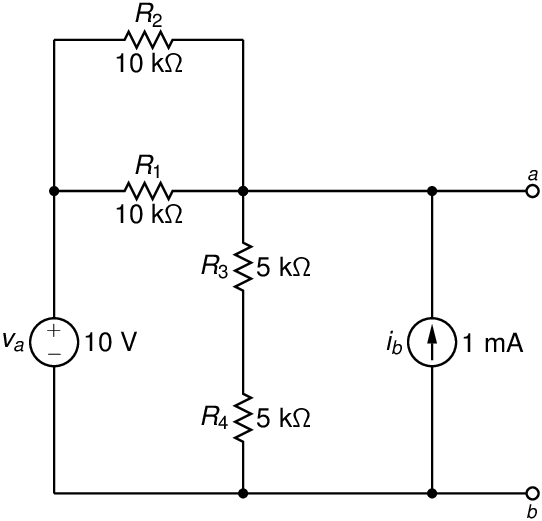
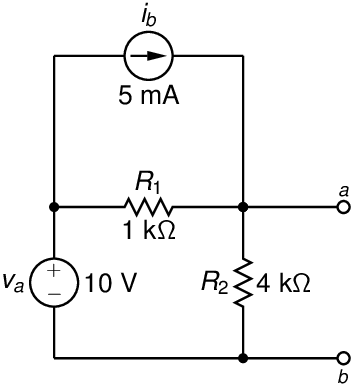
Use source transformations to determine the Norton equivalent circuit between terminals a and b.
Superposition
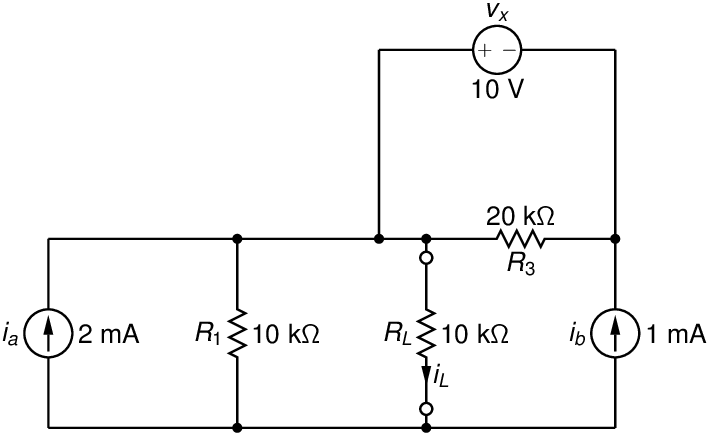
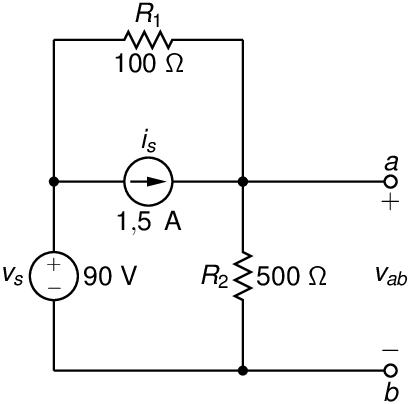
Thévenin and Norton equivalent circuits